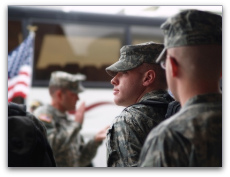
It’s known as the thousand-yard stare – an, unfocused expression that soldiers project after experiencing the horrors of war. This emotionless, war-torn look is almost shocking at first glance, masking the stress and anxiety that affects many soldiers during deployment.
The thousand-yard stare is just one way post-traumatic stress disorder (PTSD) manifests itself in soldiers. After witnessing atrocities, engaging enemy combatants, and losing friends in combat, many soldiers develop emotional disorders as they process disturbing imagery, negatively impacting every aspect of their lives.
Since the beginning of the wars in Afghanistan and Iraq, nearly two million U.S. soldiers have been deployed overseas. These soldiers are increasingly at risk of developing mental and emotional disorders, with nearly 30% of veterans showing symptoms of PTSD, according to the U.S. Department of Veteran’s Affairs.
The U.S. government and psychologists across the country understand the difficulties soldiers and veterans with PTSD encounter, and hope to alleviate some of these concerns. By working with soldiers, Army psychologists provide therapeutic services that can ease the minds of troubled individuals.
Symptoms of PTSD
The A.D.A.M Medical Encyclopedia lists out several symptoms of PTSD, including:
Reliving the event
- Experiencing flashbacks
- Repeating upsetting memories of the event
- Having repeated nightmares about the event
Avoidance
- Emotional numbing, developing uncaring attitudes
- Feeling detached
- Feeling like you have no future
Arousal
- Difficulty concentrating
- Startling easily
- Feeling more aware (hyper vigilance)
- Feeling irritable or having outburst of anger
How Does Post-Traumatic Stress Disorder Affect Soldiers?
According to the National Institutes of Health, post-traumatic stress disorder is a type of anxiety disorder that can occur after experiencing a traumatic event. While PTSD can affect any number of people, soldiers are at higher risk for the disorder because they often encounter many traumatic events in a relatively short period of time.
The high levels of stress and anxiety that PTSD exposes soldiers to can cause them to withdraw, abuse substances, grow depressed, or even commit suicide. In fact, in 2012, nearly 18% more U.S. troops committed suicide than died in combat, according to a report from the Pentagon.
These statistics suggest that the front lines of warfare may not lie in a physical location, but rather in a mental one. In “Post-Traumatic Stress Disorder, Depression, and Other Psychological Sequelae of Military Deployment,” authors Greg Reger and Nancy Skopp describe four major areas of stress in recent military deployment.
Environmental Stresses
Particularly in Iraq and Afghanistan, soldiers are exposed to excessive weather conditions that rapidly change from hot to cold. Sandstorms, incredibly dry weather, and unusual terrain can worsen stress felt by soldiers, enacting a mental toll.
Environmental conditions can also worsen hazards like disease and injury. Infectious bacteria and viruses thrive in hot conditions, causing soldiers greater anguish in the summer months of combat.
Physiological Stresses
The long days and nights of combat cause many soldiers to operate with little sleep, impacting their performance over time. Exasperating this problem, soldiers can develop insomnia and anxiety-induced nightmares, causing them to lose what little opportunities for sleep they have.
Soldiers in the hot, dry climates of Iraq and Afghanistan also struggle to maintain adequate hydration, leading to exhaustion in the battlefield. With little sleep and water, soldiers are more at risk for injury or death.
Emotional Stresses
During combat, soldiers must contend with wartime realities that can negatively affect their mental state. For example, witnessing a friend die in combat floods a soldier with emotions, as they contend with their own survival while mourning the death. Other common stresses soldiers experience include:
- Having to kill enemy combatants
- Frequent fire fights
- Having to perform emergency first aid on friends
- Improvised Explosive Devices and rocket/mortar attacks
- Significant physical injuries
Problems at home often compound anxieties and stresses felt on the battlefield. Soldiers with families and spouses struggle with financial concerns, worries about infidelity, and distance from loved ones.
Cognitive Stresses
Soldiers must make last-second life or death decisions that they live with for the rest of their lives. Making sacrifices causes many soldiers to struggle with coming to terms with their decisions, and their deployment leaves them with little support in the field.
Being cut off from spouses, families, friends, faith communities, and other social supports causes many soldiers to question their decisions, leading to higher anxiety. Some soldiers who adjust to this lack of social support find it hard to return home and start anew.
While these experiences can seem overwhelming to many soldiers, Army psychologists have developed several therapies to treat PTSD and other combat-related disorders. By treating these disorders, Army psychologists help these troubled warriors re-adjust to civilian life.
How can PTSD affect my marriage?
For many soldiers, thoughts of a supportive spouse awaiting them at home help alleviate much of the stress and anxiety brought on by deployment. However, symptoms of PTSD often put unwanted strain on a relationship, especially when the soldier returns home.
According to “Hitting Home: Relationships Between Recent Deployment, Post-Traumatic Stress Symptoms, and Marital Functioning for Army Couples,” the demands of military life aren’t fatal to most marriages. Typically, military couples must possess four adaptive traits that mediate the negative aspects of military life — communication, fun, friendship, and physical intimacy.
However, symptoms of PTSD can undermine each of these traits in the following ways:
- Nightmares lead some couples to sleep separately
- Avoidance can lead to isolation and rejection of fun activities
- Arousal symptoms can lead to tension, anger, and rapid escalation of conflict
Source: Journal of Family Psychology
Providing Services for Army Soldiers and Veterans
Because PTSD symptoms are highly related to memories and emotions tied to wartime, Army psychologists provide several therapies that allow soldiers to process these experiences. According to the U.S. Department of Veterans Affairs, Army psychologists treat soldiers and veterans using two main forms of therapy:
Cognitive Processing Therapy
Cognitive processing therapy allows soldiers to understand and change how they think about traumatic events they experienced, and their aftermath. A form of cognitive behavioral therapy, cognitive processing therapy teaches a solder that certain thoughts about trauma cause them to stress, worsening their symptoms.
Army psychologists first simply talk with soldiers, asking them to describe what thoughts lead them to become stressed, afraid, or upset. This initial education phase provides the backbone for the remainder of the therapy, allowing soldiers to become more aware of how their PTSD manifests itself.
For many soldiers, these negative thoughts and memories derive from decisions they made in the midst of combat. Soldiers might feel guilty or disturbed about these decisions, and think about them in unrealistic ways, blaming themselves. For example, a soldier who witnesses a friend’s death might begin asking himself or herself what they could have done to save the friend.
However, the reality of the situation is that, many times, these decisions are out of a soldier’s hands. Army psychologists help soldiers replace their unrealistic thoughts with more accurate descriptions of the event, allowing them to decrease self-blame and increase acceptance of the experience.
By accepting that the traumatic event was not their fault, and continuing to avoid thoughts and actions that worsen their PTSD symptoms, they develop coping mechanisms and alternative ways to process their emotions.
Prolonged Exposure Therapy
As soldiers relive events and experiences of war, they might feel “keyed up,” essentially snapping back into “combat mode.” This includes a heightened sense of awareness, avoiding public places, or feelings of extreme fear or anger.
Much of the time, these emotional states draw from one particular experience or moment that the soldier tries to avoid thinking about. According to Effective Treatments for PTSD, by Edna Foa, soldiers must confront these worrying memories if they hope to move on with their lives.
Army psychologists who engage in prolonged exposure therapy with soldiers believe that by allowing them to talk repeatedly about their experiences, they gain control of their thoughts and feelings surrounding it.
Initially, psychologists develop a hierarchy of anxieties with the soldier. This list usually rates anxiety-inducing events, memories, or experiences from highest to lowest, giving them a visual representation of what causes their PTSD symptoms.
Next, the psychologist works from the bottom up, asking the soldier to describe the severely negative event in detail. This typically includes imaginal exposure, where the soldier confronts a memory head on.
By providing narration in present tense, soldiers relive the memory again and again, in as much detail as they can remember. During this stage, the psychologist continues to prompt the soldier for more explanation, asking for small details to make the experience more realistic.
After continually exposing themselves to the troubling memory, soldiers develop a resistance to negative emotions tied to that memory. Soldiers who undertake exposure therapy are less likely to engage in avoidance, and are more open about their emotions and anxieties.
Army Psychologists – A Career in High Demand
Two ongoing wars since 2001 have increased the need for Army psychologists in the field and at home.
To meet this need, the Army has strengthened recruitment efforts by offering expanded loan-repayment programs, signing incentives, and bonuses for extended active duty, according to the article “Transforming Military Mental Health” published in The Monitor, an American Psychological Association publication.
The article, by staff writer Christopher Munsey, states that the Army’s complement of psychologists was down nearly 20% from where it needed to be in 2007. However, by offering new internships and civilian government contracts, the Army is beginning to bolster its supply of reserves of mental health experts.
If you’re interested in helping troubled soldiers and veterans in their battle for mental balance, request information from schools offering degrees in psychology.
Networks of Support for Soldiers, Veterans, and Families
If you or someone you know is experiencing symptoms of PTSD and needs help, find where you can get the support you need by exploring some of the following resources: